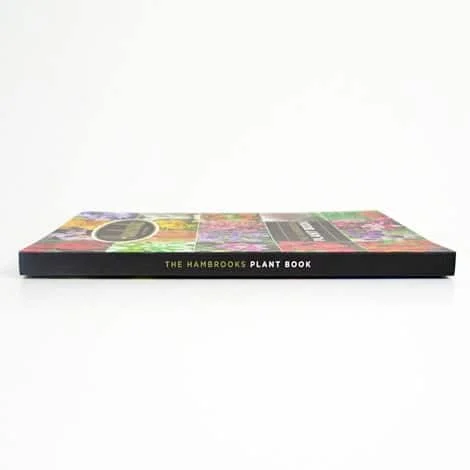
Perfect Bound Booklet Printing gives your brochures, catalogues and reports a clean square spine and a professional finish suited to commercial use. Ideal for longer page counts, this binding method creates a durable paperback-style booklet that stacks neatly and reads comfortably. Choose from short runs or bulk quantities, with consistent colour, reliable glue binding and free UK delivery as standard. A practical option for businesses that need polished presentation without unnecessary complexity.
Showing all 5 results
Perfect Bound Booklet Printing is the go-to choice when you need a professional, square-spined finish that mirrors the look and feel of a paperback book. It’s widely used for catalogues, brochures, reports and manuals where page count, durability and shelf presence matter. At Better Printing, we produce perfect bound booklets for businesses across the UK, combining experienced presswork, dependable binding and free UK delivery from our Southampton production facility.
Perfect binding uses a strong adhesive to secure the pages into a wraparound cover, creating a clean spine that can be printed with titles or branding. This makes it particularly suitable for publications that need to be stored, stacked or referenced over time. Compared with saddle stitching, it supports higher page counts and gives a more substantial, professional appearance, making it a common choice for company brochures, product catalogues and annual reports.
Because the spine is flat and squared off, finished booklets sit neatly and feel familiar to the reader. Pages open smoothly while remaining secure, which is essential for manuals, reports and other content-heavy documents.
We produce both short run perfect bound booklets and higher-volume orders, using the most appropriate print process for the job. Digital printing allows us to turn around smaller quantities quickly and cost-effectively, while lithographic printing is used for larger runs where colour consistency and unit cost are critical.
This flexibility means you’re not forced into over-ordering. Whether you need a limited batch for a meeting or a bulk print run for nationwide distribution, the finished result is consistent, controlled and suited to commercial use.
All booklet production is managed within our 20,000+ sq ft facility, from print through to binding and dispatch. Our team includes experienced press operators and finishers who understand how paper choice, ink coverage and glue application affect the final result.
By keeping production under one roof, we maintain control over quality and turnaround times. It also allows us to handle more complex jobs, such as perfect bound catalogue printing with mixed stocks or heavier covers, without relying on third parties.
Perfect binding is widely used for:
For businesses producing custom printed booklets, this binding style offers a balance of cost, durability and presentation. It’s professional without being over-engineered, which is why it remains one of the most requested binding methods in commercial print.
Better Printing is part of the InPrint Group, established in 1986 and trusted by thousands of UK businesses. From our Hampshire base, we deliver nationwide with free UK delivery as standard. Our mix of lithographic and digital capability allows us to respond quickly when deadlines are tight, supported by a production team available 24 hours a day, six days a week.
We’re ISO-certified for quality and sustainability, and our long-standing experience means jobs are planned realistically, not over-promised. If you’re ordering booklet printing services for a live campaign, launch or event, reliability matters as much as print quality.
Every job is priced based on quantity, specification and turnaround, ensuring you pay for what you need rather than a one-size-fits-all package. Businesses come to us for affordable booklet printing that still meets professional expectations, whether they’re publishing internally or presenting to customers.
If you’re looking for a dependable UK printer for perfect bound booklets, our team is equipped to handle everything from artwork checks through to final delivery, with consistent results and clear communication throughout.
Perfect binding gives booklets the polished look of a professional softback book. This FAQ covers page counts, paper, spine printing, file setup and pricing.