Account
£0.00 0

Basket

No products in the basket.

Basket
£0.00 0

Basket

No products in the basket.

Saddle Stitch Booklets

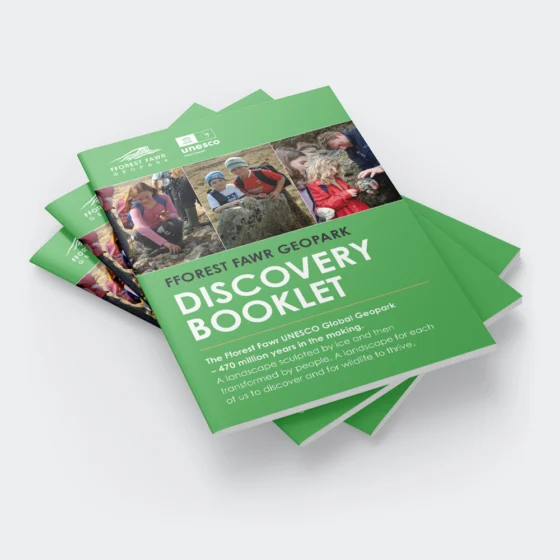
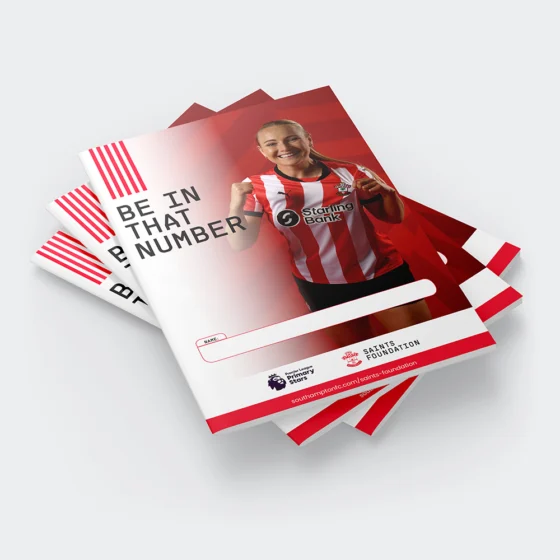
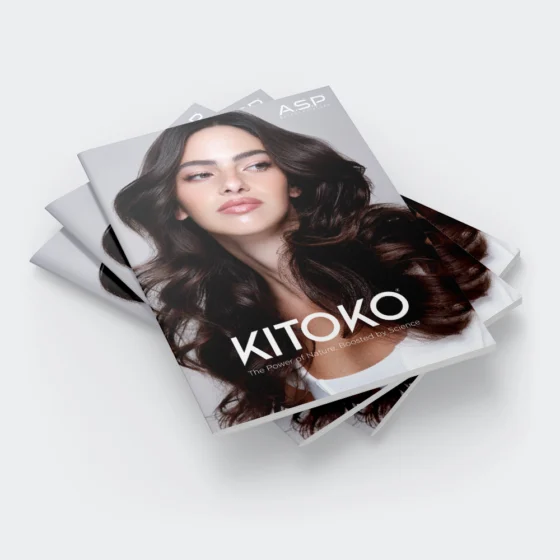
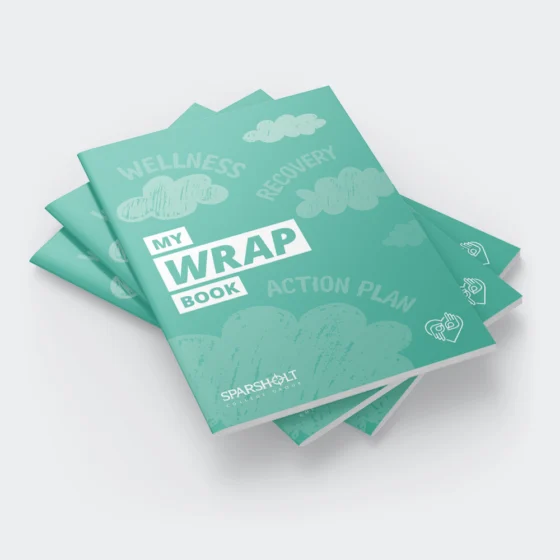
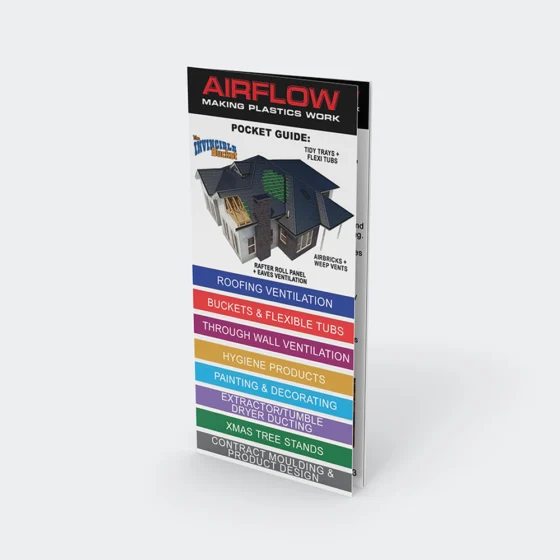
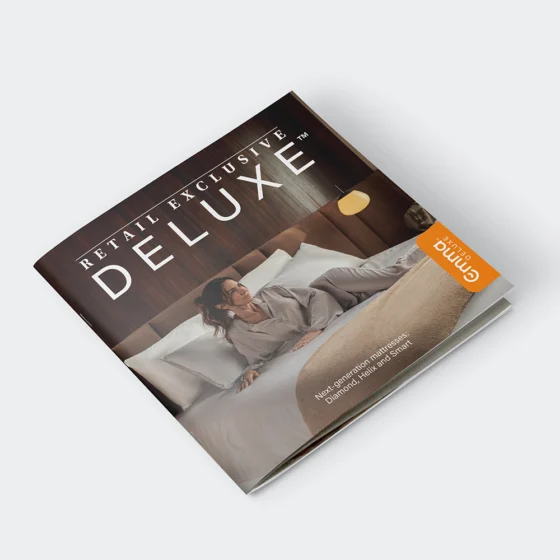
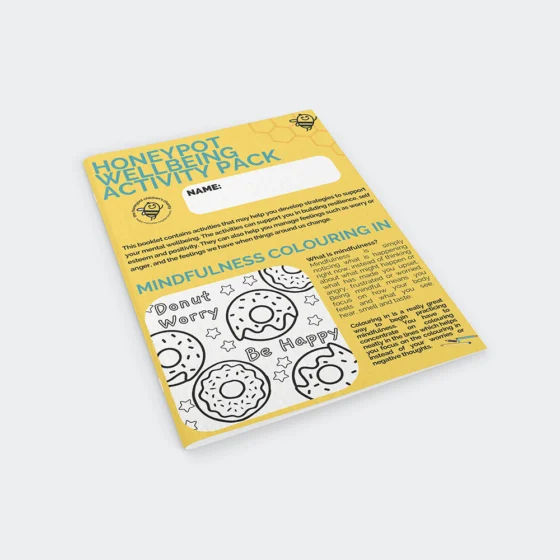
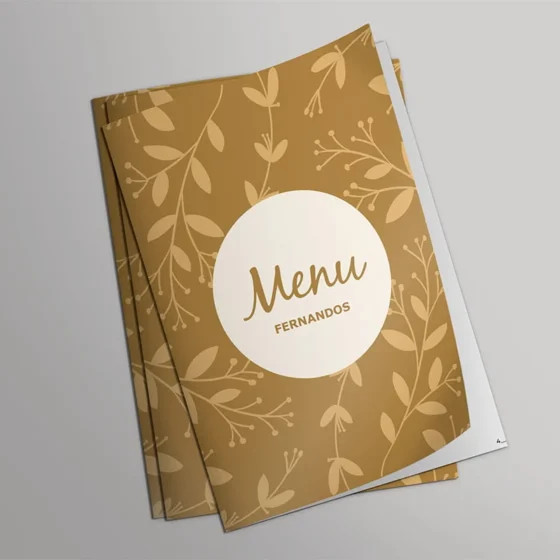
Saddle stitch booklets are printed in-house in Southampton, from 8 to 80 pages, with free UK delivery as standard. Choose A6, A5, A4, DL or square formats on silk, gloss or uncoated papers from 80 to 450gsm, with matt, gloss, silk, soft-touch or anti-scuff lamination for covers. Digital presses handle short runs and tight deadlines, and litho takes care of larger, colour-critical volumes.

Frequently Asked Questions

Everything you need to know about saddle stitch booklet printing — sizes, page counts, paper, design files, pricing and delivery — answered in plain English.

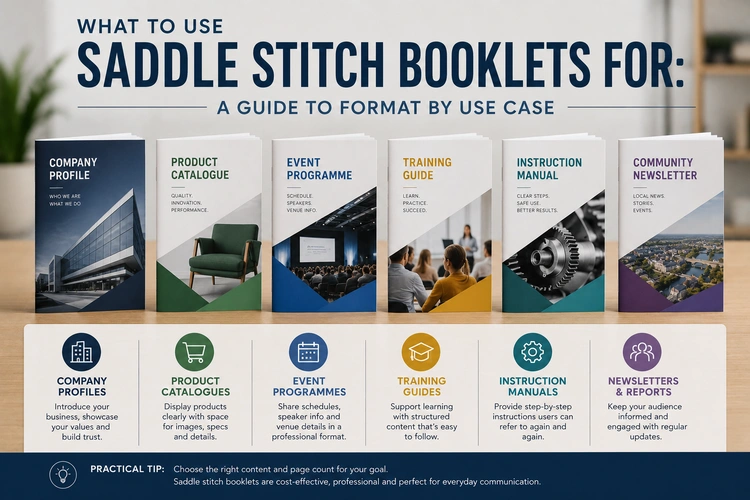
A saddle stitch booklet is created by folding printed sheets of paper in half and stapling them along the spine. It's the most common form of booklet binding because it's quick to produce, affordable and works beautifully for promotional booklets, brochures, catalogues, programmes and magazines.
The name comes from the printing equipment: during binding, the folded pages sit over a saddle-shaped support while staples (or 'stitches') are pushed through the spine. The term refers to the binding method, not actual sewing.

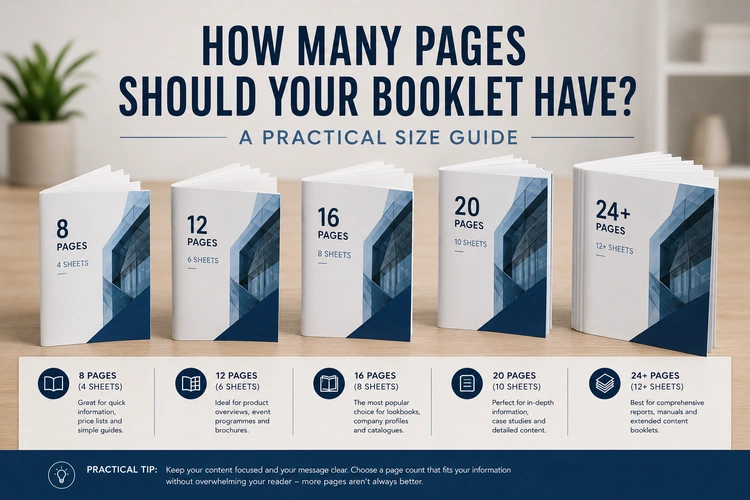
Saddle stitch booklets typically work best between 8 and 64 pages. Page count must always be in multiples of four (8, 12, 16, 20, 24…) because each folded sheet creates four printed pages.
The practical maximum is around 64 pages on standard paper, though this varies with paper weight. Beyond that, the spine becomes too thick to fold cleanly and perfect binding is recommended instead.
Yes. The most popular sizes are A4 (210×297mm), A5 (148×210mm) and square (210×210mm), but bespoke dimensions are available to suit your branding or unique design.
A5 is the most popular size — it's compact, posts easily and reads comfortably. A4 is preferred for product catalogues and corporate brochures where larger images and more detail are needed.

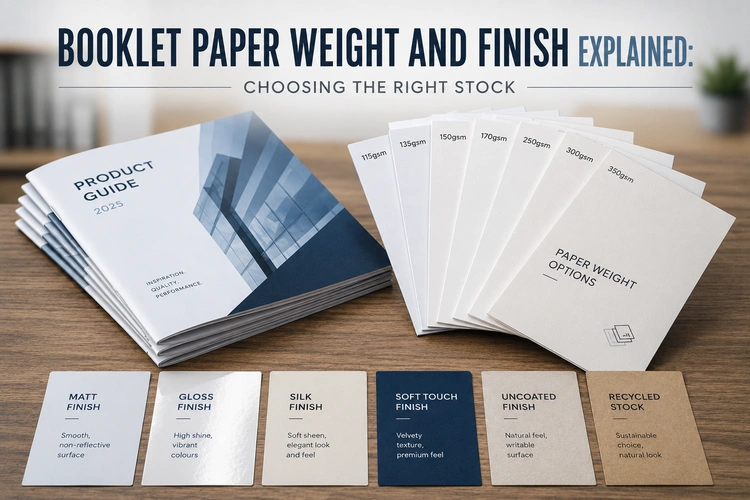
Inner pages are usually printed on 100–170gsm silk, gloss or uncoated paper. Covers are typically 200–300gsm with optional matt, gloss or soft-touch lamination for a premium feel.
Yes — using a heavier cover stock (250–350gsm) gives a more professional finish and improves durability. Lamination, spot UV or foil can also be added to the cover.
Absolutely. Mixing a heavyweight cover with lighter inside pages is the most popular configuration and keeps weight, postage costs and reading comfort balanced.

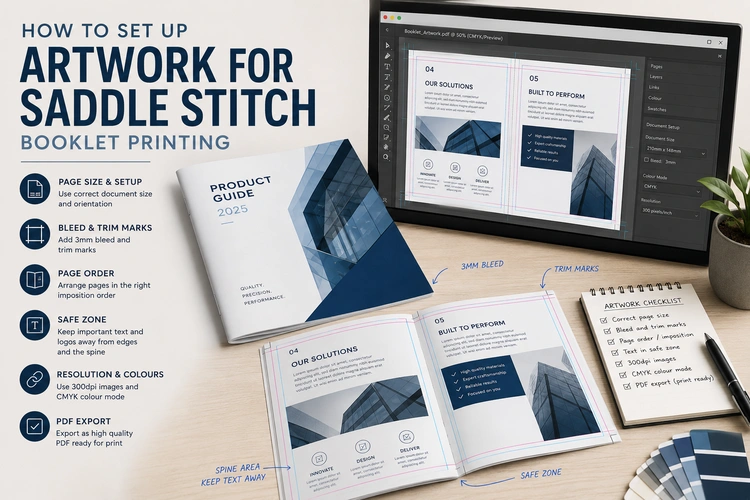
Supply a print-ready PDF in single pages (not spreads), in the correct page-count multiple of four, with 3mm bleed, crop marks and embedded fonts. Set images to 300dpi and convert colours to CMYK.
Always supply single pages in reading order. The printer's imposition software automatically arranges them into the correct printing spreads. Supplying spreads can cause pagination errors.
Add 3mm bleed on all four edges of each page, with a 5mm safety margin inside the trim line so important text and logos aren't cut off during trimming.

Saddle stitching is one of the most affordable booklet binding methods. Costs depend on size, page count, paper stock and quantity. Larger print runs significantly reduce the per-unit price.
Most printers accept orders from as few as 25 booklets, with bulk pricing kicking in from 250+ copies. Digital printing makes short runs cost-effective.
Standard turnaround is 3–5 working days from artwork approval. Express, next-day and same-day options are often available for urgent orders.

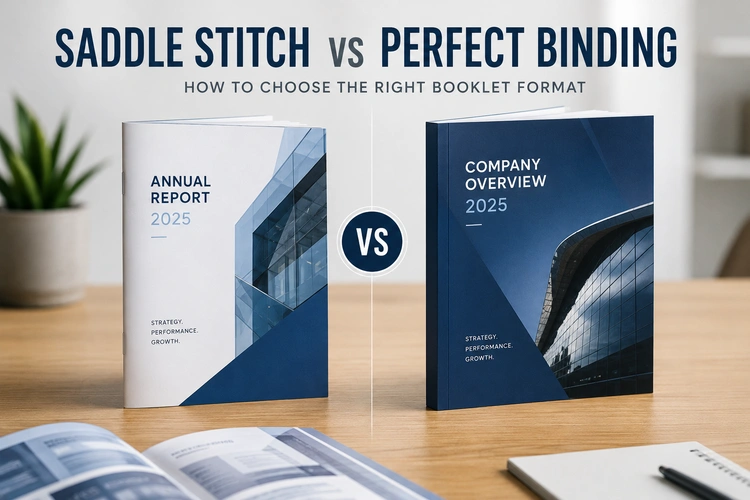
Saddle stitching uses staples through a folded spine and suits booklets up to about 64 pages. Perfect binding uses glue and a flat, printable spine, making it better for thicker publications like books and manuals.
Yes — saddle stitched and stapled booklets refer to the same product. 'Saddle stitch' is the professional printing term.
They lay relatively flat, especially when printed on thinner paper, but not as flat as wire or coil binding. For booklets that must lay completely flat (such as music or training manuals) wire-o binding is recommended.

Here’s what our customers have to say

Related Resources for Saddle Stitch Booklets

Choosing the right saddle stitch booklet often involves more than selecting a page count or paper stock. The articles below provide practical guidance on artwork preparation, binding methods, print finishes, sizing, and production decisions, helping you evaluate the options that best suit your project before placing an order.
© Better Printing 2026. All Rights Reserved
payment